


On 16 September 2020, Beacon Fund held a webinar to announce the launch of an evergreen fund targeting female entrepreneurs in emerging Southeast Asia. During the discussion, Beacon debt experts have demystified debt and busted some of those myths that people may believe about why debt was risky or bad. To learn more, please check out this ‘About Debt’ Q&A Series: Debt or Equity — Which is Best to Grow Your Business? articles available in three languages including Vietnamese, Bahasa and English.
Q1
Sandra: “Many of the entrepreneurs that I talk to are often confused whether it is better to raise equity financing or debt financing. What’s the difference between debt and equity?”
A1
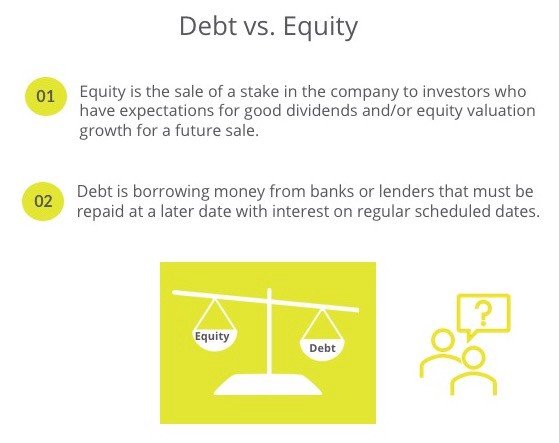
Chi-Ling: “Equity is about the sale of a share in your company to equity investors. There is a myth that the main benefit of equity is that you don’t have to pay it back. While that may technically be true, equity isn’t actually the no-strings attached solution it may seem. Because equity investors invest with the understanding that they are buying a stake in the company, and from that stake they will either be paid good dividends or they will be able to sell that share in the company for much more than they paid for it, because of really high and fast growth. So a business is then under pressure to either generate consistent profits (or pay dividends), or to justify a really healthy equity valuation. Whereas debt, on the other hand, is money that you borrow from banks or lenders and it has to be paid with interest on usually pretty definitive, regularly scheduled payment dates.”
“Equity isn’t actually the no-strings attached solution it may seem.”

Q2
Sandra: “There are different expectations like you mentioned by equity and debt investors when they are investing in a company. But many entrepreneurs that I talk to believe that debt is bad and are worried about borrowing money especially from banks. Is that really the case? And is there really such a thing as good debt?”
A2
Chi-Ling: “Absolutely! Debt can be a good thing. But that said, all debt is bad debt if you can’t afford it. You need to be able to repay the debt and have positive cash flows that are able to support the debt the company takes on. Good debt increases the net worth of a company or it helps to generate income. As long as that loan is used to grow and develop a business, as long as there is a sensible and realistic business plan, a clear reason for taking out that debt and a realistic plan for paying it back, then you can use debt and it would be good debt to help companies grow. But that said, as we’ve already mentioned a couple of times, debt is not the right answer for all things and it’s not the right answer for all companies. So, if the asset that you’re thinking of buying is not going to go up in value or generate income, then you should not actually use debt to buy it. So good debt is debt that is used to pay for something that either has: long-term value, increases net worth or generates income.”
“Debt can be a good thing. But that said, debt is not the right answer for all things nor all companies.”
Q3
Sandra: “Debt or equity financing, which is best for entrepreneurs with growing businesses?”
A3
Chi-Ling: “It depends. The decision about whether or not to issue equity or to go and take a loan depends on many factors such as: where the business is in its growth cycle, the economic climate, the existing capital structure (how much debt does the company already have on its balance sheet). But the myth that we are trying to bust is that equity is not the best and only solution for a growing business. So growing businesses should use both debt and equity, the best capital structure is probably one that is a balanced combination of debt and equity. There is another myth that’s out there which is that debt is risky and expensive. But the reality is that debt is usually cheaper than equity, but not always the case, because too much debt is definitely a bad thing. The downside to debt is that you must maintain the ability to pay back the loan and interest in principle on the scheduled payment dates regardless of fluctuations in revenue. And if a company has too much debt or it fails to generate enough cash then the fixed-costs nature of those debt repayments can be a problem. And that’s the basic idea of why people consider debt risky is because you must make those payments on the date they are scheduled to be made. But that should not stop companies with established positive cash flows from taking on a moderate amount of debt if that’s going to help them grow. Some people believe that profitable businesses don’t need debt, but you can actually use debt to help profitable businesses grow. The benefit of debt is that it allows a business to leverage a small amount of money into a much larger sum and you can sustain much more rapid growth than if you didn’t borrow that money. And if the business does well it could well end up being worth far more than the loan originally being taken out.”
Some people believe that profitable businesses don’t need debt, but you can actually use debt to help profitable businesses grow.
Q4
Sandra: “We discussed a case where an agricultural company produces coconut sugar. The business is cash flow positive. However to serve bigger clients the company may need bigger working capital as foreign buyers usually input 30-days terms of payment. She may also need an additional machine to increase capacity.
Would you say this is a good use of borrowing? What are the important things for a company to consider before applying for a loan in general?”
A4
Chi-Ling: “Increasing capacity by buying extra machines is a really good reason for your friend’s company to use debt, as long as that company doesn’t already have too much existing debt. But it sounds like: her company is cash flow positive, the business and operations model are all proven, and she is really confident there is unmet demand for her product and it just requires extra capacity for her to fulfill that unmet demand. Those factors sound very positive for your friend to consider debt as a solution. Factors that all entrepreneurs should consider before they take out a loan:
- If you are going to buy an asset, is that asset expected to go up in value or produce income?
- How sizable is that loan relative to the company’s revenues, will loan repayments represent a big portion of the monthly revenues for the company?
- Terms and conditions of the loan. When people think of terms and conditions of a loan the first and only thing they focus on is interest rates (how much is the loan going to cost). But there are obviously much more terms and conditions in and about the loan, and those really need to be understood before signing on the dotted line to take out the debt.
- Do the entrepreneurs understand the risks and what could happen if things go wrong?
- Will borrowing this money improve the company’s finances in the long run?
So it is very important for businesses to assess whether the loan will improve the company’s finances over time and how much repayment as compared to income that the company can afford.”
It is very important for businesses to assess whether the loan will improve the company’s finances over time and how much repayment as compared to income that the company can afford.
Q5
Sandra: “Let’s say that I’m an entrepreneur who runs two branches of coding schools and based on market demand I feel like I can open two more centers. How do I know how much I should borrow for my company’s expansion?”
A5
Chi-Ling: “A company should only borrow as much debt as the cash flows of the company are able to support. Remember we keep saying that all debt is bad debt if you can’t afford it. So companies that have too much debt will find it difficult to grow. This is because of the high cost of servicing that debt. Regular steady cash flows are required to pay interest and principal on the loan and have to be budgeted for. So if you borrow too much debt and you don’t have a plan to pay it back, that turns good debt into bad debt as much as the underlying asset was intended to increase income.
So for us we would need to take a close look at the company’s projected cash flows, we would need to do a little bit of analysis on whether those cash flows could support that service under a variety of downside scenarios. And then we would work out what is the optimal or best level of debt for that company to take on. So if a business has seasonal or fluctuating revenues and they are highly volatile then it is going to be a bit more difficult to guarantee that there is going to be enough cash to meet that service.”
A company should only borrow as much debt as the cash flows of the company are able to support.
Originally published at https://medium.com/beacon-fund/about-debt-q-a-series-debt-or-equity-which-is-best-to-grow-your-business-p1-5c271b4e095


